
The essential chimpanzee tracking guide
Chimpanzee tracking in Uganda is not simply a matter of finding an animal in the trees. It is a forest experience: following calls through tangled vegetation, watching branches move overhead, listening to the sudden energy of a community and slowly understanding the social world around you.
Uganda's principal habituated chimpanzee experiences include Kibale National Park and Kyambura Gorge in Queen Elizabeth Conservation Area. Uganda Wildlife Authority identifies Kanyanchu, Buraiga and Kyambura as designated entry sectors for chimpanzee tracking in its current management guidelines.

Why track chimpanzees in Uganda?
Chimpanzees offer a very different wildlife encounter from a conventional game drive. They are fast, vocal, social and often moving through several levels of the forest at once. You may hear pant-hoots before you see the animals, glimpse a silhouette high in the canopy, then find yourself watching grooming, feeding, play or a sudden movement through the undergrowth.
Kibale is particularly compelling because chimpanzee tracking sits within a broader primate landscape. Uganda Wildlife Authority describes Kibale as a major chimpanzee and primate destination, with tracking and habituation experiences available throughout the year.
Where can you track chimpanzees in Uganda?

Kanyanchu
Kanyanchu is the classic starting point for chimpanzee tracking in Kibale. Dense rainforest, established trails and habituated chimpanzee communities make it the flagship choice for a dedicated primate safari.

Buraiga
Buraiga is a chimpanzee community in Kibale National Park associated with ongoing habituation, research and tourism. It offers a more specialised primate experience within the wider Kibale landscape.

Kyambura Gorge
Here the chimpanzee experience changes dramatically: descend from the open savannah into a deep, forested gorge. It is an atmospheric addition to a Queen Elizabeth wildlife circuit.
Chimpanzee Habituation
For travellers who want more than a brief encounter, the habituation experience offers a longer, slower day observing chimpanzee behaviour alongside the specialist team.
Where are Uganda's visitor chimpanzees?
For this guide, the most important distinction is between Kibale National Park—with Kanyanchu and Buraiga sectors—and Kyambura Gorge in Queen Elizabeth National Park. UWA's current guidelines identify Kanyanchu, Buraiga and Kyambura as designated chimpanzee-tracking entry sectors.
Build the safari around the chimps.
Kibale: dedicated primate focus, tracking and habituation.
Kyambura: chimpanzees combined naturally with Queen Elizabeth's savannah wildlife.
Tracking or habituation: which should you choose?
These are related experiences, but they are not the same. Standard chimpanzee tracking is designed around finding a habituated community and observing it for a defined viewing period. The Chimpanzee Habituation Experience is more immersive and follows a community that is still being habituated to human presence.
| Experience | What it feels like | Best for |
|---|---|---|
| Standard tracking | A focused forest search followed by an encounter with a habituated chimpanzee community. | First-time visitors, mixed safaris and travellers who want to combine chimps with several other Uganda highlights. |
| Habituation experience | A longer, more observational day with a community undergoing habituation, accompanied by the specialist team. | Wildlife enthusiasts, photographers, researchers and travellers who want to study behaviour in greater depth. |
| Kyambura Gorge | A dramatic descent into a forested gorge surrounded by Queen Elizabeth's savannah. | Travellers already visiting Queen Elizabeth who want to add a primate experience to their wildlife circuit. |
What happens on a chimpanzee tracking day?
The exact sequence depends on the sector, season, chimpanzee movements and the instructions of the ranger team. UWA's current guidelines specify morning and afternoon chimpanzee tracking start times of 8:00am and 2:00pm, while the habituation experience begins earlier. Treat the official briefing and ranger instructions as the authority for the day.
Meet the ranger team, receive the day's instructions and prepare for walking in a forest environment.
Follow trails and signs of chimpanzee movement. The walk may be easy in places and demanding in others.
Calls, branch movement and distant vocalisations can be important clues before the chimpanzees come into view.
Once the community is located, settle into the experience and observe without trying to influence the animals.
The trek ends according to the ranger team's instructions and the designated tracking schedule.
What might you see?
Every encounter is different. Chimpanzees may be high in the canopy, crossing the forest floor, feeding quietly or erupting into vocal and social activity. A patient visitor can also notice much more than the headline species.
| Possible moment | What to look for | Why it matters |
|---|---|---|
| Vocalising | Pant-hoots, calls and responses moving through the forest. | Chimpanzee communication can reveal where groups or individuals are located and how the community is interacting. |
| Feeding | Fruit, leaves and other forest foods. | Feeding behaviour helps explain why chimpanzees move through particular parts of the forest. |
| Grooming | Individuals sitting together and carefully grooming one another. | A visible part of chimpanzee social life and relationships. |
| Movement | Fast travel through branches or across the forest floor. | One of the reasons chimp tracking feels dynamic rather than static. |
| Other primates | Monkeys and other forest species sharing the habitat. | Kibale is a broader primate destination, so the walk itself can be rewarding even between chimp sightings. |
When is the best time to track chimpanzees?
Chimpanzee tracking and habituation are available throughout the year. UWA notes that the rainy season can offer good tracking conditions because chimpanzees may remain closer to food sources, while drier conditions can mean animals travel deeper into the forest in search of food.
| Period | Potential advantage | What to prepare for |
|---|---|---|
| Wetter periods | Lush forest, abundant vegetation and potentially rewarding chimpanzee activity. | Muddy trails, rain showers and slower walking conditions. |
| Drier periods | Often more comfortable conditions for moving on forest trails. | Chimpanzees may range farther or deeper in search of food; wildlife movement is never guaranteed. |
| Year-round | Flexible for travellers combining chimps with a wider Uganda itinerary. | Come prepared for changing forest conditions rather than relying on a single weather assumption. |
How difficult is chimpanzee tracking?
There is no universal trek length. The forest can be relatively gentle in one section and steep, muddy or tangled in another, and the chimpanzees decide how much walking is required. The most useful preparation is not extreme fitness but confidence walking for several hours over uneven ground.
What should you pack?
Pack for a wet tropical forest rather than a conventional open-air safari. A small daypack is usually more useful than a large bag, and your camera should be easy to reach without becoming a distraction.
Chimpanzee tracking etiquette
Chimpanzees share many vulnerabilities with humans, including susceptibility to infectious disease. Responsible tracking therefore matters. Follow the ranger team's instructions closely, maintain the required distance and never attempt to touch, feed, call to or lure a chimpanzee closer.
What goes well with chimpanzee tracking?
Chimpanzee tracking is particularly easy to weave into a western Uganda journey. Rather than treating the forest as a standalone excursion, Kingo can build it into a route where the landscapes change naturally from one day to the next.
Chimpanzee tracking paired with a community-led wetland and primate experience.
Forest primates followed by savannah wildlife and a Kazinga Channel boat experience.
A primate-focused journey that moves from chimpanzees into the mountain forests of southwestern Uganda.
The classic western arc for travellers who want chimpanzees, big wildlife and gorillas in one carefully paced journey.
Permits, timing and booking
Chimpanzee tracking is a regulated activity. UWA's current guidelines state that tracking should take place through designated entry points, with UWA guides and authentic permits or tickets. Standard chimpanzee tracking has defined morning and afternoon start periods, while the habituation experience begins earlier.
For the latest official information, consult the Uganda Wildlife Authority chimpanzee tracking page and the UWA chimpanzee habituation information.
Photography: how to get better chimp images
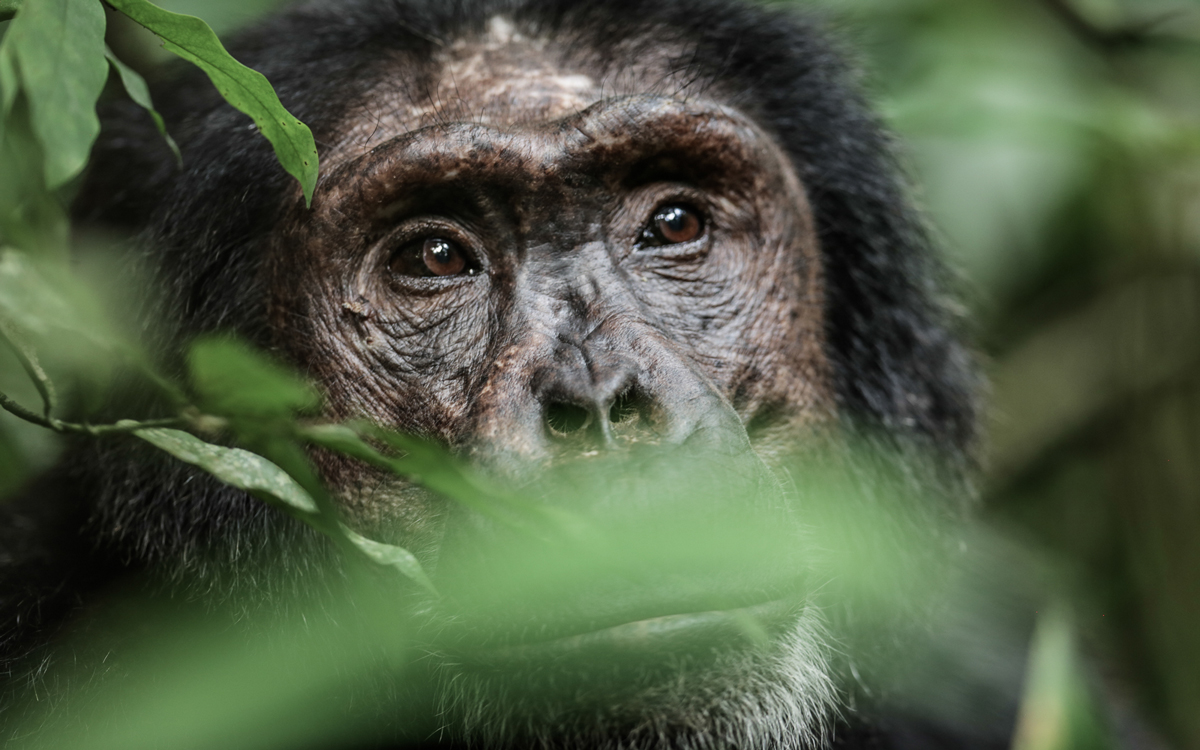
Chimpanzee photography is challenging because the forest is visually busy and the animals may be high above you. The best approach is patience rather than chasing a perfect frame. A camera with a useful telephoto range helps, but so does learning to watch the canopy before lifting the camera.
| Challenge | Better approach |
|---|---|
| Dark forest | Use a lens and camera setup that can handle lower light; avoid relying on flash. |
| Animals in the canopy | Look for openings in the leaves and wait for the chimp to move into clearer light. |
| Fast movement | Keep settings ready before the encounter rather than changing everything once the animal appears. |
| Dense vegetation | Accept partial views. A natural portrait through leaves can be more evocative than a forced clear shot. |
Why include chimpanzees in your Uganda safari?
Because they change the rhythm of the journey. A game drive lets the landscape open around you. Chimpanzee tracking asks you to enter the landscape, slow down, listen and read signs. The contrast makes a western Uganda safari feel richer and more complete.
For travellers already considering gorilla trekking, chimpanzees add a fascinating second great-ape chapter. The two experiences are not interchangeable: the forest, terrain, behaviour and pace are different. Together, they reveal two very different worlds within Uganda's extraordinary primate country.
Your chimpanzee adventure
Follow the calls into the forest.
Tell us how much time you have and whether chimpanzees are the centrepiece or one chapter of a larger Uganda safari. Kingo Adventurers can build the route around the experience you want.
Planning note: chimpanzee permit availability, fees, operating procedures, visitor limits and access arrangements can change. Confirm current requirements with Kingo Adventurers and the Uganda Wildlife Authority before travel.